Hello productivity enthusiast!
Yuko.ai is your premier destination for integrating smart technology with daily goal-setting and productivity enhancement. Join us in exploring how AI-driven reminders and seamless app integration can revolutionize your approach to achieving success.
-
We Analyzed 10,000 Completed Tasks. Here’s What Actually Predicts Follow-Through.
[Post-launch article — to be completed with real Yuko usage data] Editorial note: This article is designed to be written after Yuko has accumulated sufficient usage data to support original research claims. The structure below outlines the intended argument and data journalism format. Placeholder sections…
-
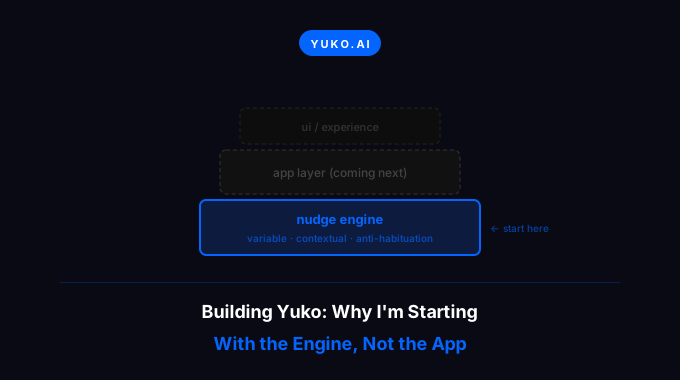
Building Yuko: Why I’m Starting With the Reminder Engine, Not the App
On the counterintuitive sequencing decision that shapes everything else The standard advice for building a consumer app is to start with the interface. Users don't experience your architecture. They experience what they see and touch. So build the thing they'll see and touch first, get…
-
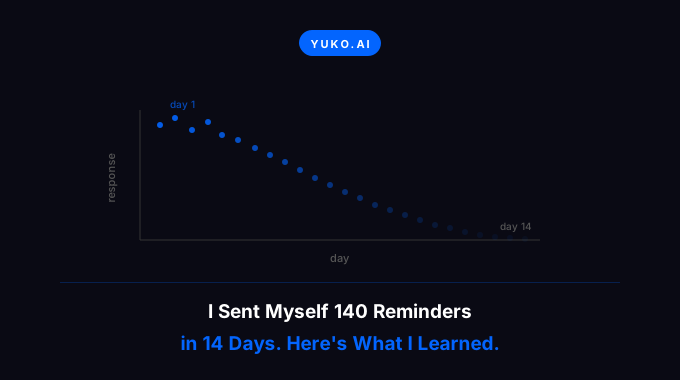
I Sent Myself 140 Reminders in 14 Days. Here’s What I Learned.
The Twilio experiment that became the product insight behind Yuko The idea started as a provocation: what if I actually tested what makes a reminder work, on myself, with enough rigor to learn something real? Not a thought experiment. An actual experiment. I built a…
-
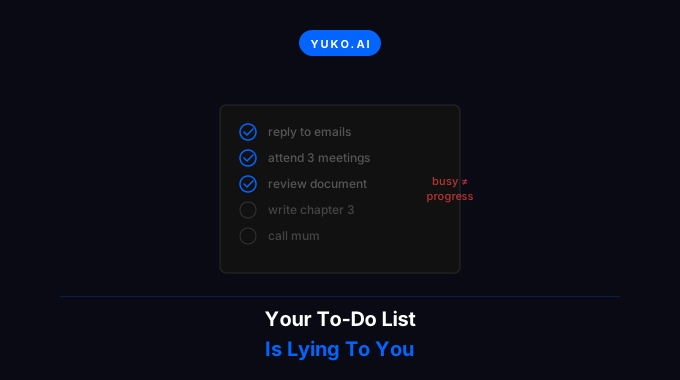
Your To-Do List Is Lying To You
The gap between planning and execution — and why the list itself is part of the problem The to-do list is the most widely used productivity tool in human history. It predates the smartphone, the computer, and the filing cabinet. Roman Emperor Marcus Aurelius kept…
-
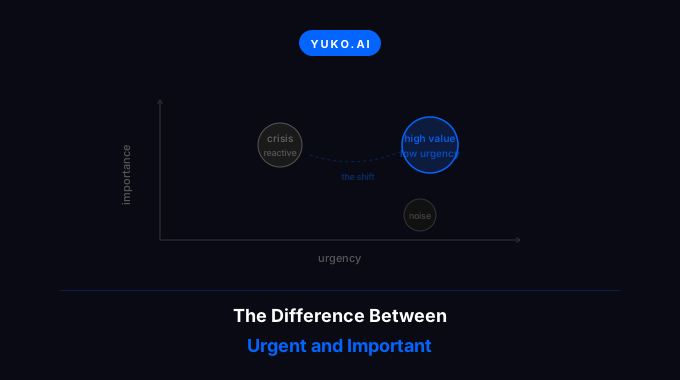
The Difference Between Urgent and Important Is Costing You Years
A thought experiment, a cognitive bias, and a framework for reclaiming your time Here is a thought experiment worth sitting with. Imagine two versions of your professional life over the next five years. In the first version, you spend those five years doing exclusively urgent…
-
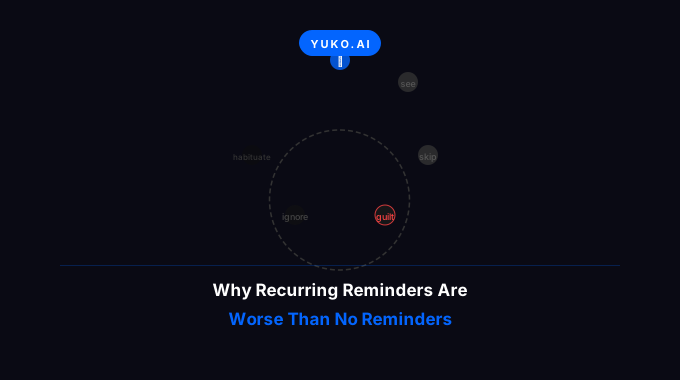
Why Recurring Reminders Are Worse Than No Reminders
The counterintuitive neuroscience of why your most reliable habit is making you worse at follow-through There's a common belief embedded in every productivity app ever built: that the problem with follow-through is forgetting, and the solution is a well-timed reminder. Set it once, make it…
-
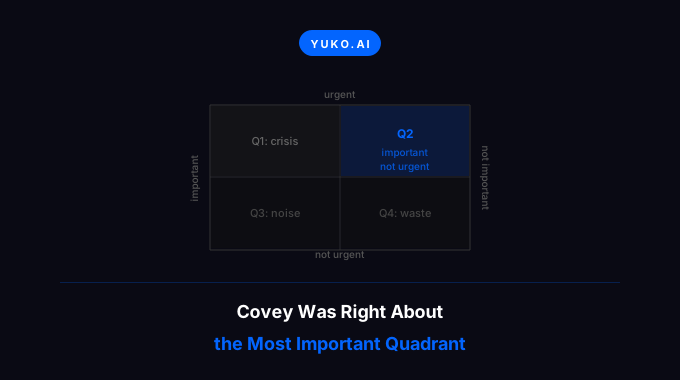
Stephen Covey Was Right About the Most Important Quadrant — And Everyone Ignores It
The behavioral science of why we systematically avoid the work that matters most In 1989, Stephen Covey introduced the Eisenhower Matrix to a mass audience in The 7 Habits of Highly Effective People. The framework divides tasks into four quadrants along two axes — urgency…
-
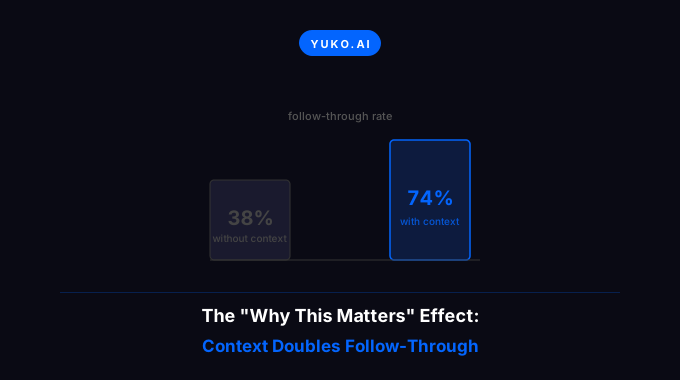
The “Why This Matters” Effect: Why Context Doubles Follow-Through Rates
Adding one sentence to a reminder changes its entire neurological profile In 2002, hospital hygiene researchers tried something simple. They put up signs near handwashing stations that said "Hand hygiene prevents you from catching diseases." Compliance among hospital staff improved marginally. Then they changed the…
-
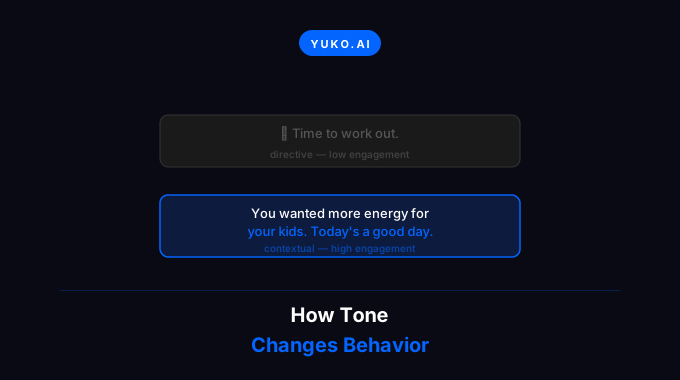
How Tone Changes Behavior: The Psychology of How You Talk to Yourself
The words a reminder uses aren't just packaging. They're the mechanism. Imagine two messages arriving on your phone at the same moment, about the same task. The first says: "Reminder: Complete project proposal." The second says: "Your proposal could be the thing that changes this…
-
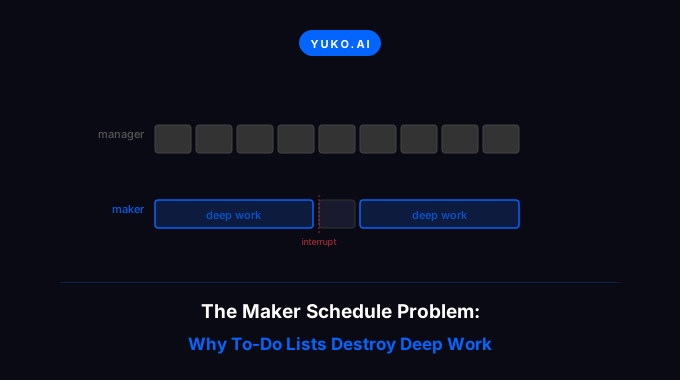
The Maker Schedule Problem: Why Traditional To-Do Lists Destroy Deep Work
Paul Graham identified the problem in 2009. Nobody has fixed it yet. In 2009, Paul Graham published a short essay called "Maker's Schedule, Manager's Schedule." It is one of the most-shared pieces of writing in tech culture, routinely cited in discussions of meeting culture, deep…
